Research Interests
Microfluidics
Materials
Biosensors
Optofluidics
Lab on a Chip
Diagnostics and Therapeutics
Nanotechnology
At the Hashemi Lab, we are working on projects concerned with the design of microfluidic systems with applications to clinical diagnosis, energy, and environmental monitoring.
Our primary research objective is to understand how microfluidic transport could provide a fundamental science base for novel fabrication of polymer microfibers with controlled size, shape, and molecular alignment. Computational fluid dynamics and experimental techniques will be employed to design and study characteristics of highly structured microfibers.
Also, hydrodynamic focusing of one laminar stream by another has inspired new approaches in biosensors and cell analysis. We have devised a novel system to ensheathe, focus, and separate the sample stream from the sheath streams. Using grooves at very specific orientations in the upper and lower surfaces of the microchannel, the sheath fluid is directed around the sample stream in the microflow cytometer. The dynamics of fluid flow can be reversed by reversing the direction of the forces applied to the system at low Reynolds number. Integrating the concept of “unstirring” into the groove-based sheath flow system by placing reverse grooves in the channel pointing upstream, the sample stream is separated from the contiguous sheath streams. The unsheathing capability provides the opportunity to recover particles from the sensor with minimal dilution or to recycle the sheath fluid for long-term unattended operation.
News and Announcements
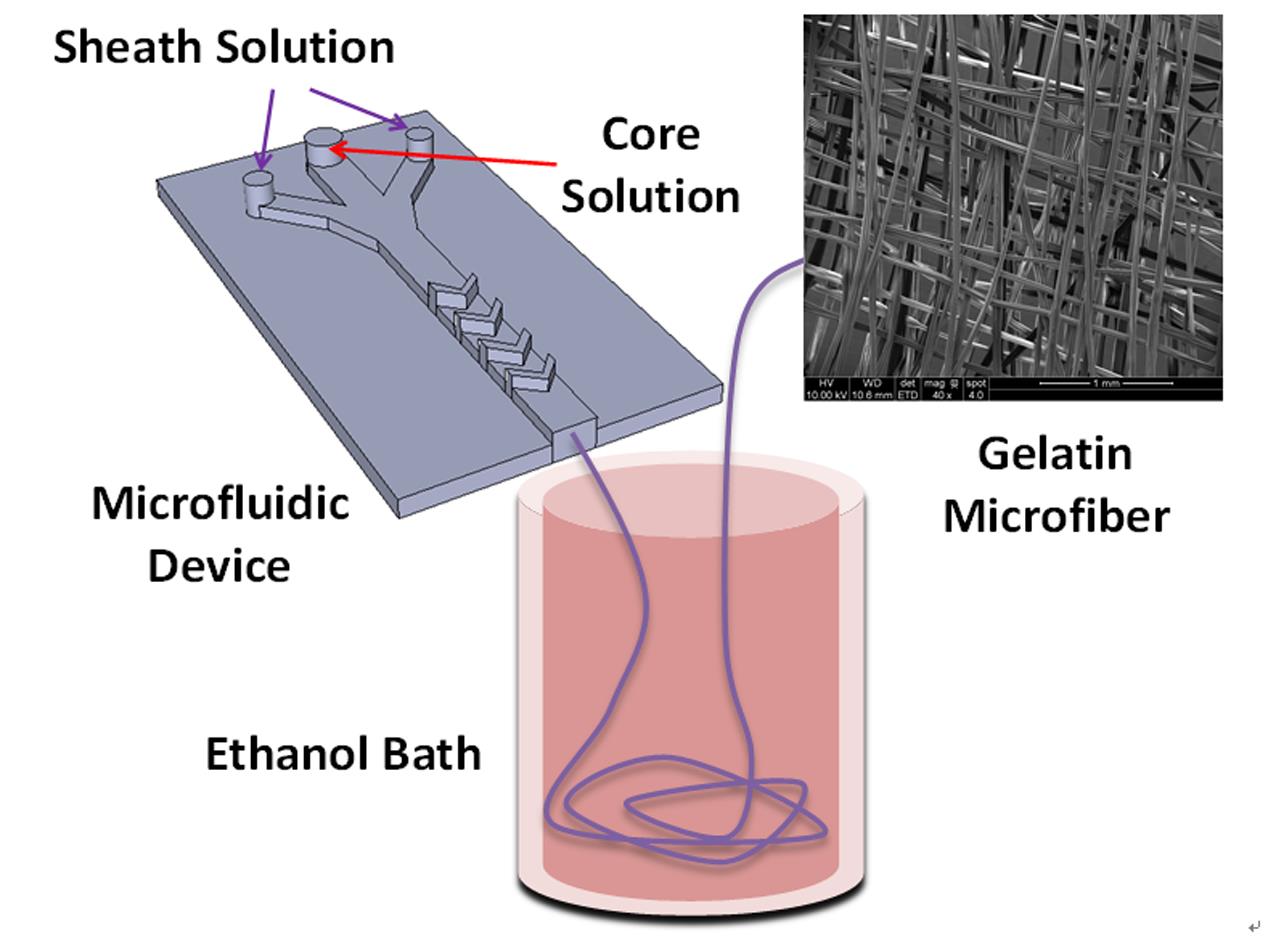
A microfluidic approach is used to fabricate gelatin fibers with controlled sizes and cross-sections. Uniform gelatin microfibers with various morphologies and cross-sections are fabricated by increasing the gelatin concentration of the core solution.
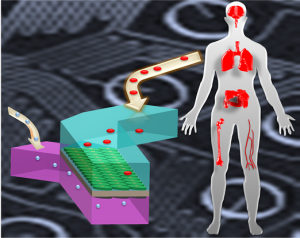
A systematic approach is taken to review current technologies pertaining to organ-on-a-chip systems. Organ-on-a-chip technology provides a practical solution to many of the issues presented by both two-dimensional models and animal testing.
Iowa State University student Catherine Meis, Le
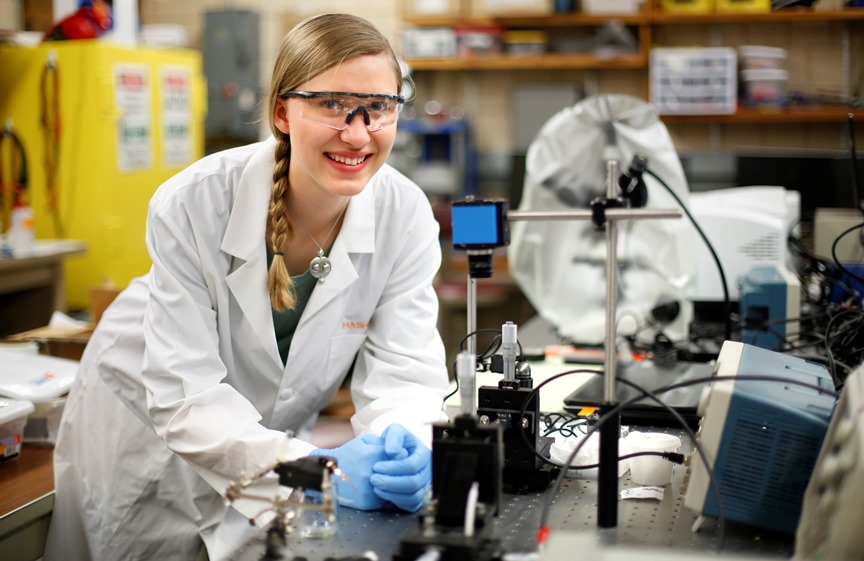 Mars, has been named a 2015 Goldwater Scholar,
the nation's premier undergraduate scholarship
in mathematics, natural sciences and
engineering. (Full
Story)
Mars, has been named a 2015 Goldwater Scholar,
the nation's premier undergraduate scholarship
in mathematics, natural sciences and
engineering. (Full
Story)Hashemi receives NRC/ASEE research publication award for optofluidic approach
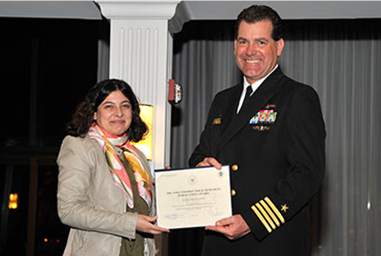
Nastaran Hashemi, William March Scholar in Mechanical Engineering, was chosen to receive the 2011 Naval Research Laboratory NRC/ASEE Research Publication Award for her paper “Optofluidic characterization of marine algae using a microflow cytometer.” (Hashemi Publication Award)
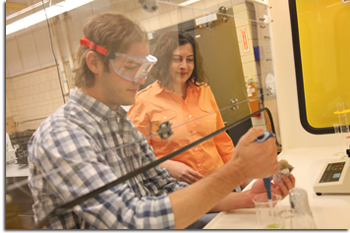
Hashemi selected to receive an NSF Mid-CAREER Advancement award.
National Science Foundation supports Hashemi's research on Women's Health.
Hashemi elected a Fellow of American Society of
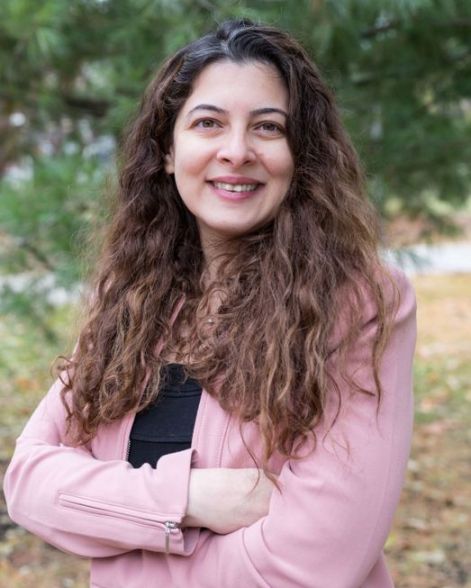 Mechanical Engineers
Mechanical engineering associate professor Nicole Hashemi has been named a Fellow by the ASME. She is also a Fellow of RSC.
Researchers simulate, assess damage to brain cells caused by bubbles during head trauma
Alex's article on characterization of astrocytic response after experiencing cavitation in vitro is highlighted by the university news, Science Daily, EurekAlert AAAS, and other news outlets.
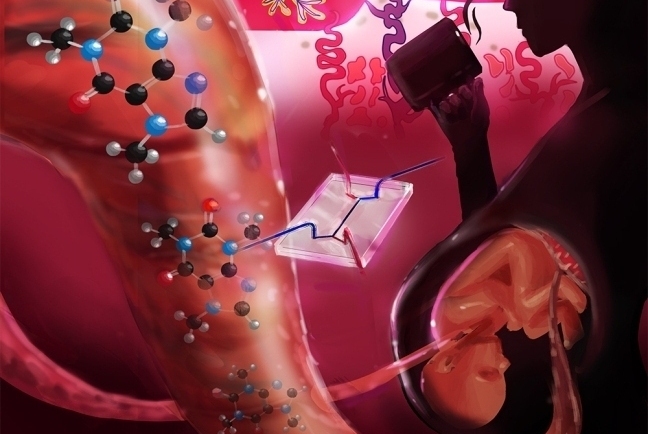
Engineers develop placenta-on-a-chip to study caffeine transport from mother to fetus
Our publication on placenta-on-a-chip device is highlighted by the university news, Science Daily, EurekAlert AAAS, Medical Xpress, Science Magazine, Futurity, and other news outlets.
Hashemi to attend National Academy of Engineering symposium
Nicole Hashemi selected to attend NAE Frontiers Symposium.
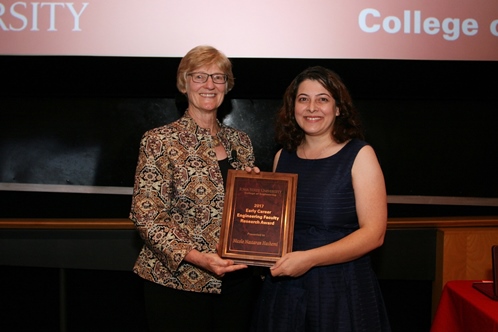
Hashemi wins Early Career Engineering Faculty Research Award
Nicole Hashemi is the 2017 recipient of the College of Engineering’s Early Career Engineering Faculty Research Award.

Hashemi featured on ASME news
ME assistant professor recently had her research featured on the first page of American Society of Mechanical Engineers
 news site.
ONR Research Grant
Hashemi Lab is awarded another grant from the Office of Naval Research to develop a 3D printing technology to study blood brain barrier.
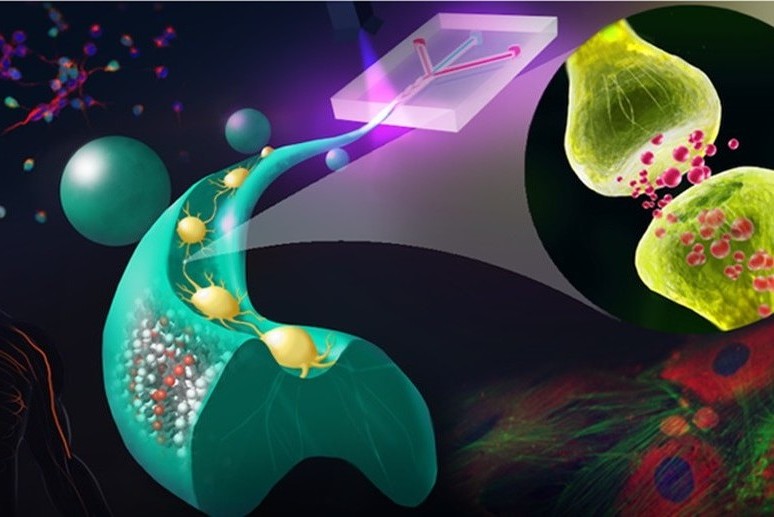
Iowa State researchers fabricate microfibers for single-cell studies, tissue engineering
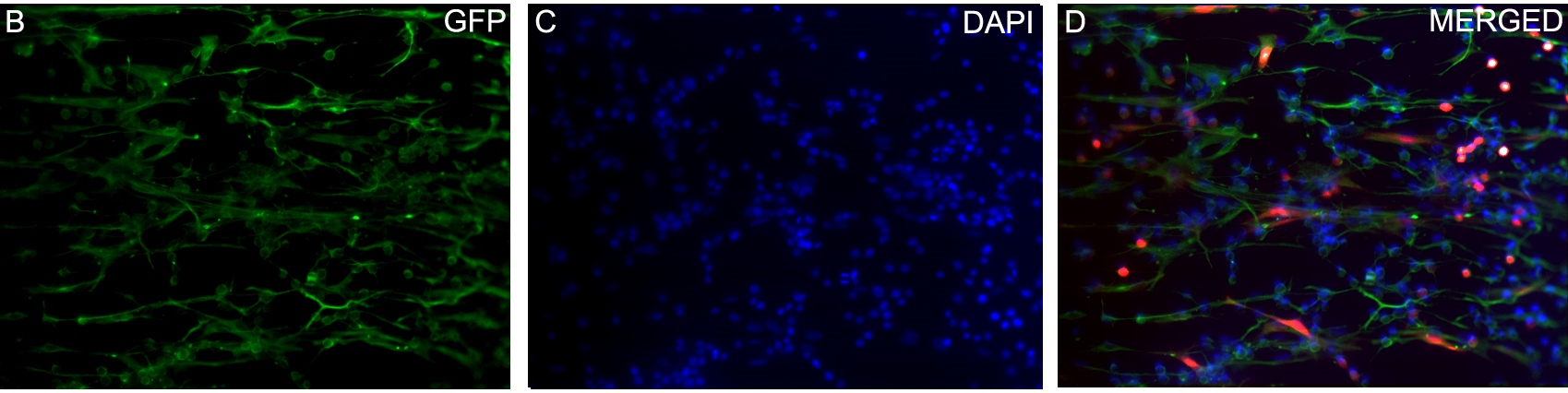
Publication on fibrous scaffolds for neuronal studies is highlighted by ISU News, Science Daily, EurekAlert AAAS, Phys.org, Science Magazine, IEEE, ASME, Nanowerk, Futurity, MSN Money, Bioscience Technology, NR Times, RegMedNet, and other news outlets.
Transient Li-Ion Battery in the News
Publication on transient electronics is featured in BBC, Forbes, Science Friday, MRS, Science Daily, CNN, and other news outlets.
3D Paper-Based Microbial Fuel Cell in the News
3D paper-based journal article is featured in Science Daily, EurekAlert AAAS, Phys.org, Science Magazine, World Scientific, Nanowerk, Science Alert, eScience News, Materials Today, Yahoo, MSN.com, Times of India, EE Times, Gadgets 360, Innovation Toronto, and many more news outlets.
5 Coolest Things On Earth This Week
Researchers at the Iowa State University have built a microbial fuel cell that generates electricity without any need for an external power source - just food. (GE Reports)
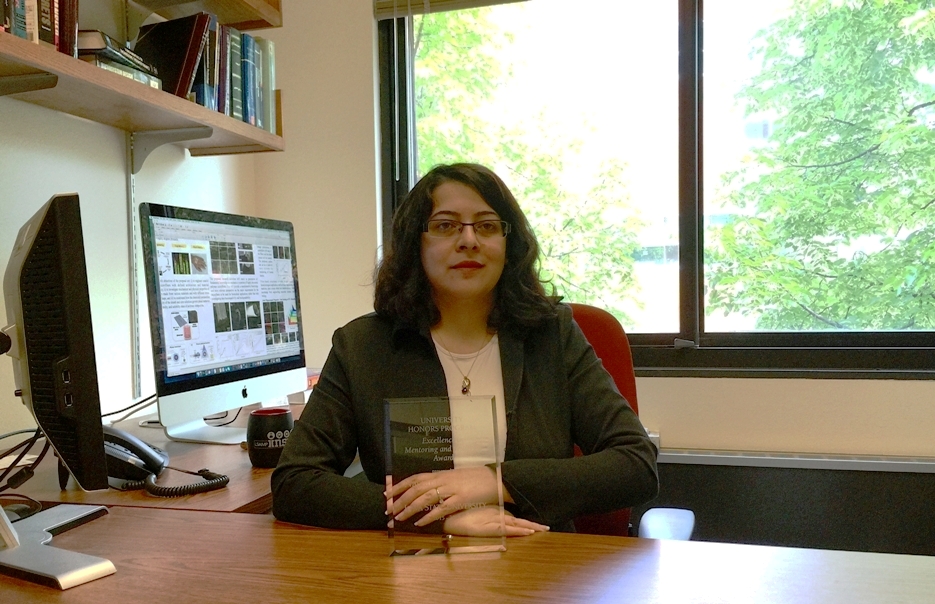
2016 University Award for Excellence in Honors Teaching and Mentoring
Prof. Hashemi is the recipient of a 2016 University Award for Excellence in Honors Teaching and Mentoring. (UHC Teaching Award)
Invited speaker at World Preclinical Congress
Prof. Hashemi will be delivering an invited talk at the 3D Cellular Models meeting in Boston in June 2016. (WPC 3D Cellular Models)
Jerremy Caplin receives 2015 Lush Young Researcher Prize
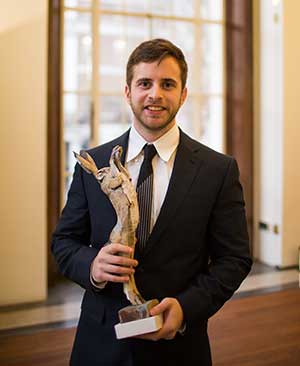
Our placenta-on-a-chip research was selected for the 2015 Lush Prize. Jeremy attended the award ceremony in London to receive the Lush Young Researcher Prize.
Hashemi to give seminar at University of Toronto
Prof. Hashemi is giving an invited seminar at the University of Toronto in the Department of Mechanical and Industrial Engineering on November 20, 2015. (Seminar Series)
Student Poster Presentations Recognized at ASME NEMB 2015
Rajeendra Pemathilaka from Iowa State University won the competition’s NEMB 2015 Audience Award for his poster, which was titled “Studying the Behavior in Organ-on-a-Chip with a Barrier Function of Epithelial and Endothelial Cell Monolayers.” (ASME News)
Nastaran Hashemi, William March Scholar in Mechanical Engineering and assistant professor, has been invited to attend the National Academy of Sciences Kavli Frontiers of Science.